The importance and challenges of last-mile delivery
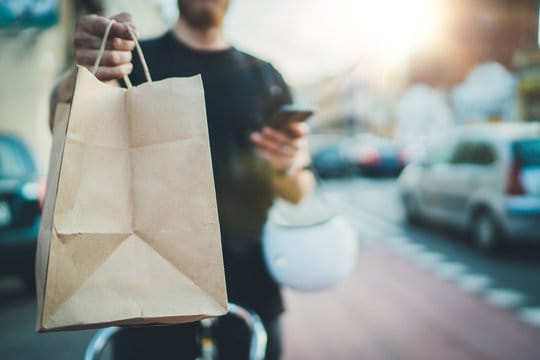
These days, we often hear the term "Last Mile Delivery," which is the equivalent of the English phrase "Last Mile Delivery," and "Last Mile Delivery has become a trend." In this article, we aim to become more familiar with last mile delivery.
We will examine the challenges of last mile delivery in the field of e-commerce and businesses that deal with product delivery. We will also look at the existing solutions in this area.
What is Last Mile Delivery?
The ever-growing rise of e-commerce and online businesses has increased. Meanwhile, the needs and demands of customers from suppliers have also increased.
Business owners have noticed this change in customer habits. The use of new methods and ideas to increase customer satisfaction is evidence of this. The logistics and delivery stages in the supply chain of e-commerce businesses include three stages as follows:
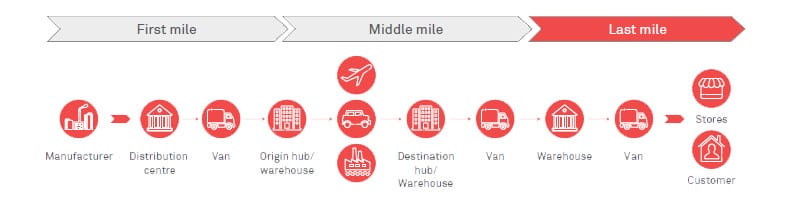
Last mile delivery marks the main difference between traditional shipping processes and modern product delivery. For example, many business analysts consider the improvement and development of last mile delivery as one of the main reasons for Amazon's progress and growth.
In essence, last mile delivery is where you are supposed to get the customer's order to them. All the processes of shipping goods, from warehousing and inventory management to packaging and order dispatch, are a chain of activities that significantly impact last mile delivery.
Challenges of Last Mile Delivery
A busy and hectic day, crowded streets, and high traffic, waiting in line to receive purchase invoices, are all reasons that encourage customers to shop remotely.
The ever-growing development of online stores, from wholesalers to stores that sell their goods specifically, has caused delivery challenges to increase day by day.
Here, we examine what factors cause customers to forgo online shopping or choose to purchase from a specific online store.
Apart from the variety of goods, one of the most important parameters that affect a customer's purchase from an online store or the use of your online services is the timely and appropriate delivery of orders and customer service.
Some of the challenges in this area include:
- Possibility of same-day delivery
- Customer expectations and needs
- Return of shipped goods
- Numerous routes and lack of sequencing
- High costs of last mile delivery
Same-Day Delivery
Same-day (24-hour) delivery can be considered a trump card for e-commerce businesses. Leading e-commerce companies like Amazon and Walmart are always trying to employ new technologies and methods to improve same-day customer order delivery.
Certainly, on paper, same-day delivery is very appealing and desirable to customers. When the phrase 24-hour delivery catches the customer's eye while shopping from your online store, it acts as a catalyst to speed up the purchasing process.
Customer Expectations and Needs
From the time when the purchasing process was followed traditionally to the present era where it takes just a click of the mouse, customer behavior in the buying cycle has undergone many changes.
For example, the ability to choose delivery time, notification of the driver's departure, the ability to track shipments, and information on the stage of the order. These are factors that are increasing every day.
Certainly, satisfying all needs is a difficult and challenging task. The important point is that large companies like Amazon have also gone through a tough and challenging path to reach their current position.
In one of the Logiico blog articles, we have discussed in detail the psychology of customer buying behavior, which we recommend you read.
Return of Shipped Orders
One of the problems that businesses face in the field of last mile delivery is the absence of the customer. Certainly, large online stores assign a set of orders to a driver and start delivering orders.
When the customer is not present at the location, time wastage and fuel consumption can be two factors that impose additional costs on the organization. Additionally, it causes disruption in the delivery schedule for other customers.
Numerous Routes and Lack of Sequencing
Tehran's traffic and high work pressure affect the delivery planning process. Which order the driver should deliver first, which route to take, which route will result in less fuel consumption and time wastage. Add to these, fleet management on snowy days. Failing to predict these conditions has sometimes caused the efficiency of some postal services to decrease by up to 50% on winter and rainy days.
High Costs of Last Mile Delivery
According to Business Insider, last mile delivery accounts for 53 percent of the total delivery process costs. With the increase in free delivery for online purchases, customers do not pay any fees to the driver for receiving their orders.
This means all costs are borne by the organization, and the more optimization is done in this area, the more profit the organization gains. These optimizations lead to fuel cost reduction by up to 40%.
Solutions for Improving Last Mile Delivery
Just as e-commerce has grown and developed from the development of the internet and internet access, it is necessary to have a technology-oriented approach like artificial intelligence to manage, grow, and improve it.
Fleet Routing
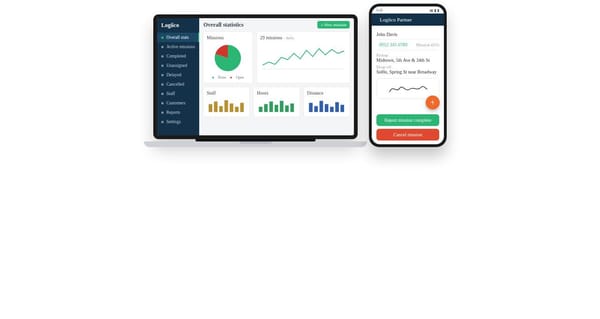
A smart and cost-effective solution to reduce the hassles caused by numerous orders during peak hours is to choose the right fleet management software.
For example, the smart routing capability of the Logiico fleet management software reduces the logistics managers' concerns about prioritizing the order of deliveries by sequencing and routing order dispatches.
This capability allows you to prioritize your destinations by reducing time wastage and cut your fleet costs by up to 30 percent.
Receiving Customer Feedback
Reviewing customer needs and listening to their voices allows us to improve parts of the delivery process, especially the last mile delivery that interacts with the customer.
For example, the ability to receive customer feedback on driver behavior, review customer criticisms and suggestions provides a good opportunity to improve last-mile delivery.
One way to receive customer feedback is to send a survey SMS with a tracking link. In this way, after the customer's order is dispatched, an SMS containing the tracking link is sent to the customer, allowing them to view the driver on the map.
With this method, even if the customer is not present at the desired location, they can inform the driver so that the necessary actions for route change can be taken by the driver.
Reducing Fleet Costs
To improve the last-mile delivery process, enhancing the performance of infrastructures, including the fleet, cargo vehicles, and monitoring driver behavior while driving is also necessary. Reducing repair costs, being aware of the timing for replacing vehicle consumables, and reducing fuel consumption are matters that require constant monitoring and follow-up.
For this purpose, a hardware solution for fleet management can be mentioned. Logiico's hardware solution for fleet management, using GPS and smart sensors, provides accurate statistics on driver performance while driving.
In addition, you will receive necessary alerts regarding the lifespan of consumable parts. If the cargo cabin door is open, the driver will be promptly informed of this issue.
All these factors ensure that you have a healthy fleet and, in addition to improving the last-mile delivery process, significantly reduce ongoing costs.