What is the churn rate and why does every successful manager use it?

All managers strive to increase their number of customers while knowing that retaining all customers is impossible. However, managers can control the rate of this occurrence by identifying its causes and finding ways to improve it. The statistics below highlight some reasons why customer churn rate is important and why it is better to focus on retaining current customers before acquiring new ones.
- The probability of selling to previous customers is 60 to 70 percent, while the probability of selling to new customers is 5 to 20 percent.
- A 5 percent increase in customer retention rate can reduce costs by up to 10 percent and increase business profits by 20 to 90 percent.
- Converting a new customer to a current customer costs almost 16 times more than retaining a current customer.
- The 80/20 rule states that eighty percent of outcomes result from twenty percent of causes. In business, this rule shows us that 80 percent of future revenue is generated by 20 percent of current customers.
What is Customer Churn Rate?
Customer churn means that a customer ends their relationship with a business or, if their product is subscription-based like Filimo, they do not renew their subscription. The customer churn rate is the percentage representation of this churn. This term is also explained by other names; for example, in Persian, it is called attrition rate, and in English, it is also known as attrition rate. This rate shows us, within a specific time period and based on the following three factors, what percentage of our total customers did not use our services or product during that specified period.
- Total number of customers at the beginning of the period
- Number of customers lost during the entire period
- Number of customers acquired during the entire period
Formula and Calculation of Customer Churn Rate
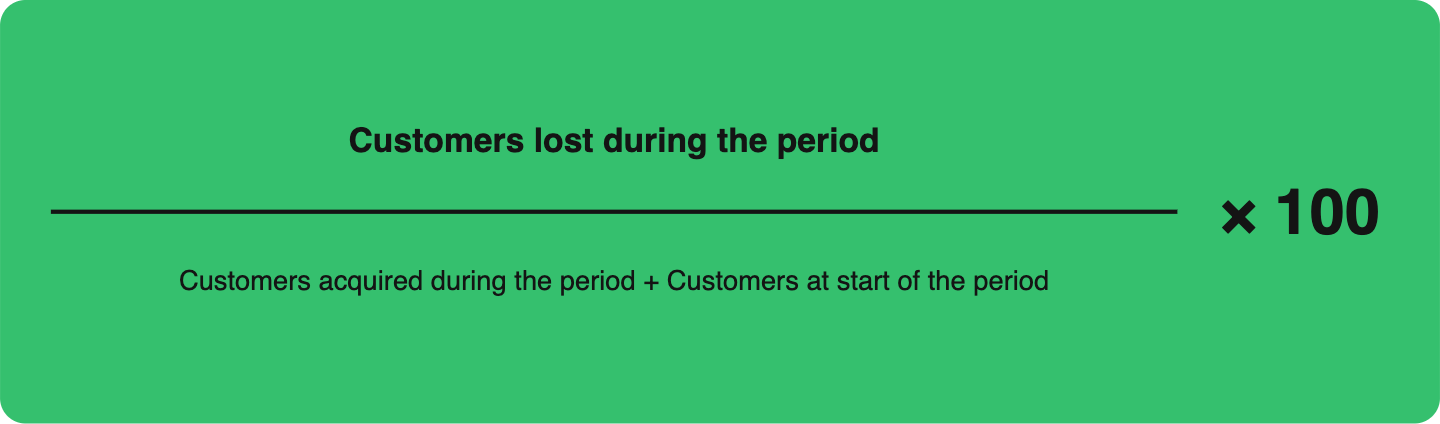
First, we obtain the following:
- The length of the period we need to examine
- The number of customers we had at the beginning of that period
- The number of customers added during that period
- The number of customers lost during that period
Now, according to the formula, we substitute the numbers to calculate the customer churn. Finally, to determine the customer churn rate, we multiply the result by 100 to express it as a percentage. Suppose we want to examine the customer churn rate for a business over a six-month period. During the examination, we find that this business had 500 customers at the beginning of the period, gained 100 customers, and lost 50 customers over these six months. According to the formula, we have:
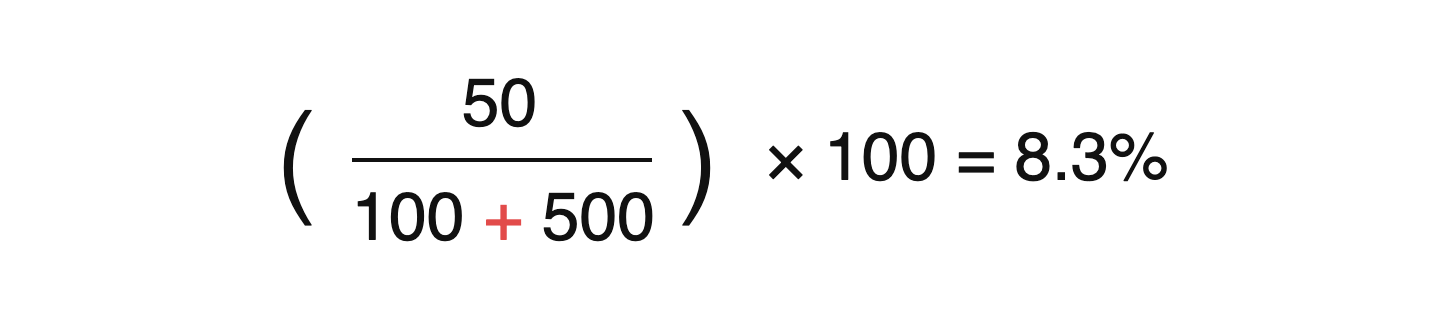
Based on the explanations, the 8.3% figure we obtained is the churn rate, meaning that during this six-month period, 8.3 percent of the total existing customers stopped using our product and services or did not renew their subscription.
Appropriate Churn Rate for Our Business
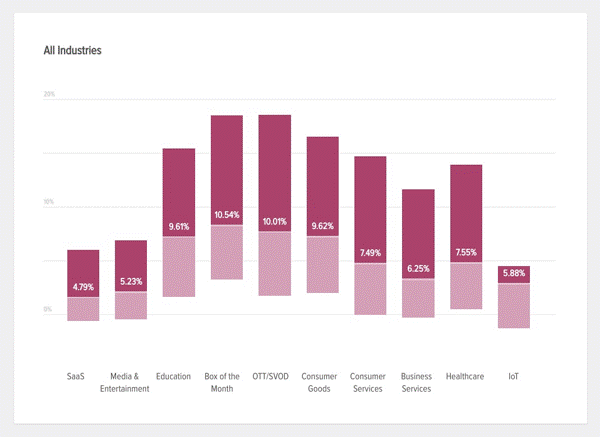
The appropriate numbers for customer churn rate vary depending on the industry you are in. According to research by Recurly research, the churn rate in B2B businesses is 4.91 percent, and in B2C businesses, it is 6.77 percent, with an average of 5.6 percent. Therefore, it is better to have a complete understanding of the industry you are working in before analyzing your churn rate.
How to Control and Reduce Churn Rate
- Try to find out why your customers do not renew their subscriptions or make purchases. To find the reasons for customer separation, you can use methods such as direct contact with the customer, conducting surveys, using email marketing, encouraging customers to give feedback using tools like discounts, etc.
- Always strive to exceed customer expectations, so they have more motivation to collaborate with you and find purchasing from you enjoyable. For example, when they buy a certain product from you, send it with a special box or include an additional product with their purchase.
- Categorize your customers based on the level of interaction and purchases they make from you. For those who are more loyal and purchase more from you, have plans to create a better and more special feeling for them. For example, occasionally offer them a separate and special discount, and for those with weaker interactions or fewer purchases, encourage them to buy and interact more with your programs.
- Always strive to update and improve your products and services.
- If you have the ability to enter into long-term contracts with customers in your business, do not hesitate to do so.
- In addition to identifying your loyal customers, identify customers who are close to churning and, besides diagnosing their problems, find a way to solve them.
- Lastly, we suggest that, apart from all these efforts, try to use your product yourself and give an unbiased opinion about it to find and offer the best version of your product or service.
Conclusion
One of the factors you can pay attention to in order to increase the number of your loyal customers and at the same time have them introduce your products and services to others is calculating the customer churn rate. On the other hand, calculating this rate helps you understand the approximate ratio of your loyal customers to your churning customers. And finally, remember that retaining and selling to old customers is much less costly than finding new customers and selling to them.