Increase in fuel prices and challenges facing businesses
From restaurants to online stores, from carpet cleaning services to online florists, all are grappling with rising fuel prices. But what about those businesses that are involved with fleets and order deliveries? Should they continue with the previous approach, or should they devise a strategy? In this article, we want to address this issue.
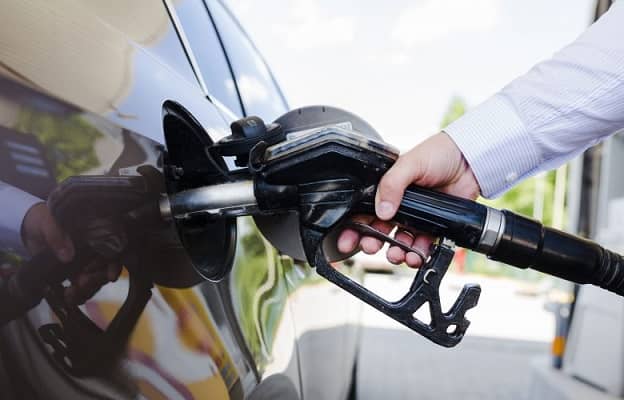
In November this year, 2019, gasoline was rationed in the country, and the price of free gasoline suddenly tripled. This event has been very costly for those businesses that used their fleet for order deliveries or used third-party companies for delivery, causing a sudden jump in fuel consumption costs and the final price of goods.
But why did the increase in gasoline prices turn into a crisis? Given the poor economic situation and the heavy pressure of sanctions on the people, companies have not been able to fully cover the increased costs by raising product prices. In other words, the market cannot bear further price increases. But what is the solution? To protect the company's profit margin, when sales cannot be increased, costs must be reduced. Costs that become more apparent with the increase in fuel prices or the same 3000 Toman gasoline.
In the above example, we only examined one aspect of the issue. The increase in gasoline prices inherently causes inflation. This inflation affects the prices of car and motorcycle parts and necessities such as engine oil, brake fluid, air filters, etc., which in turn increases the maintenance costs and overall increases the cost of order deliveries. This issue affects both companies that have a transportation fleet and those that indirectly send parcels to their customers, but companies with proprietary fleets deal directly with these costs and will certainly have more concerns in this regard.
What is the solution?
The reality is that completely eliminating the effect of this issue is logically impossible under any circumstances. But should we accept this threat like other companies and bear all these losses?
The answer to this question is no!
When a change occurs in one aspect of your business, you must engineer, manage, and optimize your activities in that area. But how? There are several methods for this, and we want to mention three of them.
Traditional Management or Visual Method
In this method, managers try to minimize the route of couriers and combine multiple orders for delivery by one courier to help optimize fuel consumption and consequently optimize delivery costs. On the other hand, by monitoring the couriers' travel times, they try to control time and consequently gasoline consumption.
Review of this method: This method is one of the least expensive methods and is suitable for companies that cover limited areas of the city and whose workforce is familiar with the best routes in those areas. However, it is not very suitable for companies that deliver across the city and have a large number of orders, as the slow speed of the system leads to reduced flexibility and decision-making in critical situations.
Another problem with this method is the inability to transfer information and the lack of proper information recording. In fact, since this method relies on individuals, in the absence of that individual, the company practically loses its capability in this area.
Also, for high-scale operations in terms of the number of orders, this method cannot respond due to its manual and non-automated nature.
Using Excel Tools
In this method, by creating specific tables of orders, drivers, and customers, recording information and determining their status in Excel, and also using Google Sheets for online data transfer from the center to motor couriers, they organize the fleet's activities. This information is also traceable and reportable.
Review of this method: The problem of the previous method, namely the inability to manage high scale, does not exist in this method. This method requires separate manpower for related tasks; however, what is considered fleet optimization and order delivery in the company is not monopolized by a specific individual and is transferable. Overall, using this method can help reduce the incurred costs. However, this method does not allow for development and smartization and is not effective for developed operations. Also, due to the lack of geographical data collection, it practically lacks the ability to optimize and improve methods and smart reports such as high-order areas, high-demand management, peak order hours, etc.
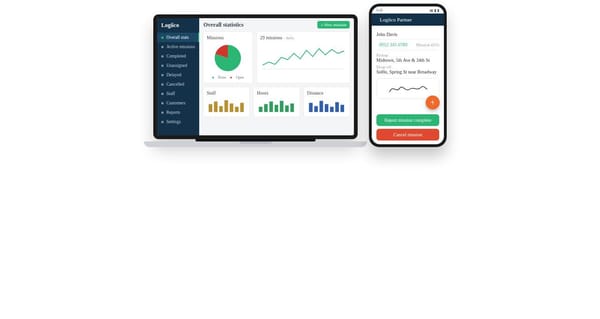
Using Fleet Management and Order Delivery Management Software
With the advancement of data science and artificial intelligence, software specifically for managing and organizing fleets and order deliveries has been developed. These software provide various logistics capabilities for companies, including fleet management and order delivery optimization. These software offer other features such as:
- Order and destination routing
- Reducing time spent
- Controlling driver behavior
- Calculating fuel consumption and distance traveled
- Real-time viewing of all company fleet vehicles on the map
- And more...
These features play a very important role in the company's activities because they result in the calculation, optimization, and reduction of fuel consumption. For example, monitored drivers perform about 5% better than unmonitored drivers; now imagine your drivers are under constant control and reports of inappropriate or weak performances are automatically sent to you.
Different companies, based on the type and scale of their business, can choose one of these methods to reduce the incurred costs. Each method has its own advantages and disadvantages, and each helps in some way to address the concern of reducing fuel costs.
In equal conditions for everyone, the company that can make a difference will be more successful. By improving and managing fleets and order deliveries, your customer sees you better than competitors, so they prefer you over them.
At the beginning of the discussion, the issue that has arisen for companies, which has increased their costs, was mentioned. It was shown that what is certain is the direct or indirect reduction of the company's profit. Finally, we referred to methods and tools that can control this event and put you ahead of your competitors.
Companies that are involved with fleet systems and delivery will sooner or later have to address logistics and pursue it better than before, and with the mentioned methods, engineer and manage it; because the environment is competitive and about capturing a larger market share, and they must strive in all dimensions to outpace competitors.