Pharmaceutical distribution fleet management

In the collection of articles on the Logiico blog about the importance of fleet management in various industries, we intend to explore the pharmaceutical distribution industry. In previous articles, we discussed fleet management in the oil and gas industry. We examined the fleet management indicators in this industry and saw that there are simpler ways to reduce costs and increase fleet security instead of using expensive hardware and tools like GPS.
In this article, we will examine the fleet of pharmaceutical distribution companies. We will review the pharmaceutical distribution infrastructure based on global indicators and examine the impact of fleet management software in this industry. Stay with us.
An Evolving Industry
Thanks to the advancement of local knowledge and the production of domestic medicines, the pharmaceutical industry in our country has been on a growth trajectory. However, there are still issues that need to be fundamentally addressed. Well, thank God the pharmaceutical industry is moving forward!
Statistics show that before the revolution, 4-5 pharmaceutical distribution companies were operating in Iran, and after the revolution, a macro approach to the distribution industry led to the increase and expansion of these companies. At the second pharmaceutical distribution conference, a member of the strategic committee of this conference said: "The distribution industry needs policy-making and the development of a strategy, and investments should be directed towards areas that yield returns. Holding the second pharmaceutical distribution conference is a step towards achieving this goal, where experts and thinkers will engage in dialogue and exchange ideas."
Large pharmaceutical distribution companies currently operating have between 400 to 500 vehicles in operation, undertaking over 300 missions per day on average. This is a large volume of missions carrying significant investments. Managing this volume of missions and investments requires specific planning and strategy and, above all, a substantial budget.
Track Before Anything Else!

In an article on the Mit blog about key performance indicators in distribution and logistics, one of the most important key indicators is fleet tracking in various industries. Other indicators include:
- Fuel costs
- Fleet breakdowns and repairs
- Maintenance costs
- Fleet security
As mentioned above, alongside all these indicators, the issue of cost must also be considered. The important question is why so much emphasis is placed on fleet tracking?
Fleet Management: The Solution!
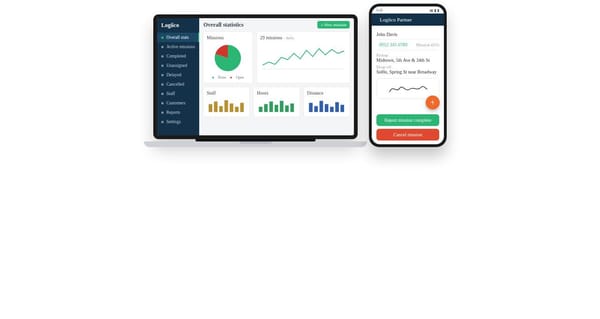
The reason for this emphasis can be seen as a response to the major problem of distribution companies, which is methods to reduce fleet costs. According to statistics from pharmaceuticalcommerce, fleet management software can reduce fleet operating costs by up to 60%.
That's not all, and using this software has other benefits besides cost reduction, which we will mention:
- Driver behavior control
- Increased cargo security
- Fleet health monitoring
- Improved driver performance
- Market differentiation
The last point might be very appealing. Having a competitive advantage over other competitors and those active in the market can make you more recognized in the market.
In the Logiico Telegram channel, we mentioned an article about data analysis and analytics in fleet management. This article, sourced from jungleworks.com, highlighted the importance of data analysis in business processes.
The question is, how can data improve processes and the execution of activities? We can consider information and data as the first step in process improvement.
Every business, at any stage of its work, needs to predict the future based on the data it has to succeed and capture the market. If this data is documented and archived continuously, with precise reports of rises and falls, it can provide a good outlook for the future to the team.
The most important advantage in these predictions, besides cost, is time. The time spent continuously analyzing documented data can save you not only money in the future but also time, allowing you to make strategic and acceptable decisions.
Why Hardware and Spending?

Many businesses dealing with fleets and fleet management often use expensive GPS devices, which in the long run not only do not see a reduction in their costs but also incur additional expenses for the repair and maintenance of these devices.
Most companies operating in the pharmaceutical distribution field are currently trying to reduce their costs given the economic conditions while maintaining comprehensive management of their fleet.
On the other hand, as mentioned in the article on the oil and gas industry, the security of cargo delivery in the pharmaceutical industry is no less than in the oil and gas industry. Now, how beneficial can using software instead of hardware be in reducing costs?
Here are three main indicators worth mentioning again to better understand the role of fleet management software in cost reduction:
- Reduced fuel consumption
- Reduced repair costs
- No need for maintenance and repairs of hardware like GPS devices
It's that simple.
Conclusion
By reviewing articles and resources on fleet management, we conclude that there are simpler ways to reduce costs, save time, and increase the productivity of our fleet instead of using expensive hardware. Methods such as using fleet management software not only reduce ongoing costs but also provide reports that can help you improve the performance of your drivers and fleet and reduce bottlenecks and obstacles in the path. Value creation and business process improvement are among the advantages that can be achieved by turning to electronic and software platforms.