Introducing 6 logistics trends in 2021 that are transforming the transportation industry!
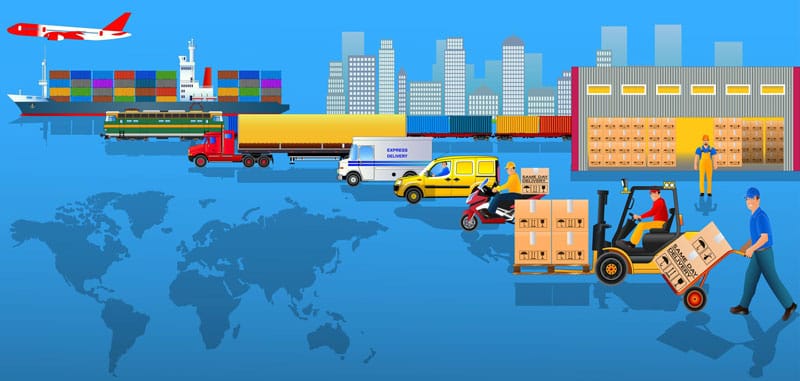
The year 2020, with all its ups and downs, came to an end. Various technologies and solutions found their way into the business arena, and many businesses, for various reasons, closed their doors and left. Today's article is dedicated to examining logistics and supply chain trends in 2021. A year in which expectations from technologies like artificial intelligence and blockchain to increase productivity and improve processes are growing more and more. Alongside all of this, we must also consider data registration using drones. A technology that, with its arrival, opened a new window in the era of communications and data analysis.
In this article, we will discuss the latest in logistics in 2021. Stay with us.
The Most Important Logistics Trends in 2021
- Artificial Intelligence and the Importance of Machine Learning
- Digital Twin Technology
- Real-Time Tracking of Goods Delivery Process
- Blockchain
- Analytical Reports and Data Knowledge
- The Importance of Analytical Reports in Process Improvement
We will continue to examine each of these items.
1- Artificial Intelligence and the Importance of Machine Learning

Over the years, the emergence of artificial intelligence and advancements in related technologies such as cargo robots, etc., have had an undeniable impact on the logistics and supply chain industry.
The story doesn't end there. We can consider artificial intelligence as one of the most influential parameters in reducing costs and saving time in various parts of the supply chain. Cargo robots and drones responsible for delivering goods have made logistics smarter than before and more reliable.
According to Gartner magazine:
Artificial intelligence will increase business value by $2.9 million and work efficiency by about 6.2 million hours by 2021.
The combination of artificial intelligence and human intelligence capabilities leads to significant growth in flexibility, efficiency, and accuracy in performing activities. This drives expectations for businesses in the logistics and supply chain field to focus on using and implementing artificial intelligence and shifting infrastructure towards greater use of robots.
2- Digital Twin Technology (Digital Twins)
Before anything else, we need to provide an explanation about digital twins or Digital Twins.
Digital Twins are virtual versions of physical devices. Digital twins are the virtual equivalent of a real product or entity. A digital twin is a comprehensive set of various data types related to an entity or product. IT researchers can use them to conduct experiments and simulations before completing and using real devices.
This project was initially used in the 1960s at NASA for simulating space capsules. According to Gartner magazine in 2017, this technology was included in their top 10 technologies of that year.
According to Gartner's prediction, with the connection of 21 billion sensors by 2020, it will be possible to create digital twins for billions of devices.
With these explanations, let's move on to digital twins and logistics!!! The main problem that existed in logistics and supply chain before was the lack of complete alignment and similarity between the digital model created and the real model. For example, the data and information collected pointed to a specific map for improvement and increased efficiency, while the model ultimately implemented had significant changes from its digital model.
Digital twin technology ensures that data and information from order placement, packaging, warehousing, and finally product delivery are correctly modeled, and by reviewing this information and data, strategic decisions are made accurately.
3- Real-Time Information from Processes

The ability to view and monitor information! A feature that has gained significant importance in recent years. Nowadays, the importance of real-time information has increased more than ever. This importance stems from the fact that the security of order delivery and real-time monitoring and control have become highly significant.
Real-time information on order deliveries and fleets enables synchronization, control, and comprehensive monitoring. Especially in situations where the fleet encounters an accident, the necessity of real-time information and data helps management make the best decision in the shortest possible time.
Research shows that real-time tracking and monitoring, and direct data and information from fleet conditions and supply chain processes can increase efficiency by 20%.
4- Blockchain
Before we delve into the impact of blockchain technology in logistics, let's first take a look at "What is blockchain technology?"
After the emergence of digital currencies like Bitcoin, blockchain entered the scene as a solution for secure transactions. In a more comprehensive definition of blockchain, we can consider it a comprehensive system for recording and storing information.
Since 2008, following the emergence of Bitcoin and blockchain, this term has attracted significant attention from various businesses worldwide. Three of the most important capabilities that blockchain can provide in logistics are:
- Increased transparency
- Increased scalability
- Increased security
Currently, companies like UPS and Walmart are investing in increasing the application of blockchain to facilitate processes in the supply chain. Although these investments are just the beginning of a project that may take a long time, the important point is the growing trend and use of this technology in the supply chain and logistics, which we must wait to observe its impacts in the coming years.
5- Analytical Reports and Data Knowledge
Logistics and supply chain data and information in the past had a traditional flavor, and all information, from valuable to worthless, was recorded and maintained. This method of recording and maintaining information created problems such as:
- Lack of data and information transparency
- High error rate in information reporting
- Issues in process control and monitoring
- Possibility of losing recorded information and data
The new platform that has emerged in recent years, relying on technological advancements and data analysis knowledge, has enabled the logistics industry to use various platforms and systems to record their information.
Emerging startups in the field of logistics data registration and analysis are developing algorithms based on artificial intelligence to predict user behavior and process paths.
This algorithm can use the data and information obtained from processes to predict the next steps. Now, what role do analytical reports play in improving process trends?
6- The Importance of Analytical Reports in Process Improvement
Perhaps naming today's era as the age of information and data is not entirely irrelevant. Especially metadata or Big Data. The importance of metadata and information in businesses gives executives the ability and capability to always stay one step ahead. Metadata allows you to make strategic decisions more intelligently and purposefully by predicting conditions.
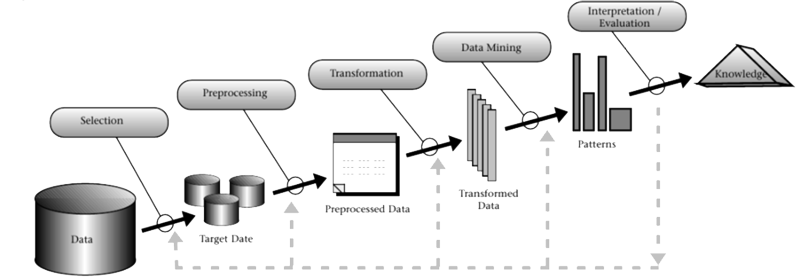
Data Mining in logistics management eventually leads to the creation of a pattern that can include information such as:
- Process priorities
- Process dependencies
- Bottlenecks and involved points in the process
- Success and failure rates of processes
- Ongoing costs at different stages of the process
This pattern ultimately, by reviewing old and new data, provides a better perspective on controlling and monitoring processes.