4 Urban Logistics Challenges + Exclusive Interview with Ali Ashtiani
Nowadays, due to the ever-increasing advancement of online businesses, the importance of the logistics industry has become more significant than ever, turning it into one of the most crucial industries in today's digital world. There are various types of logistics, with urban logistics being one of the most widely used. Urban logistics, despite its numerous advantages, faces significant challenges, some of which still lack solutions. In this article, we aim to familiarize ourselves with the most important challenges of urban logistics and examine them. However, before discussing these issues, it is necessary to understand the concept of logistics. So stay with us until the end of this article.
What is Urban Logistics?
To introduce urban logistics, we must first understand the concept of logistics. If we want to present a simple definition of logistics, we arrive at the following phrase:
Logistics refers to the process of managing goods from the time of production until they enter the market.
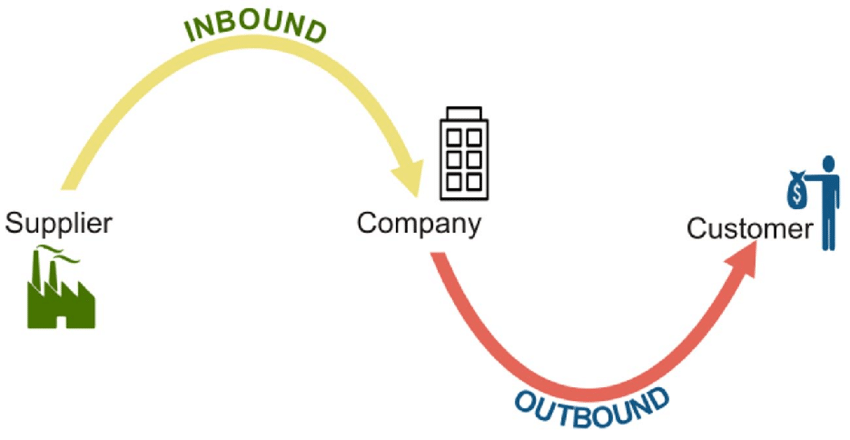
Logistics is categorized into four types based on the location of transfers: internal logistics, factory internal logistics, external logistics, and reverse logistics. In internal logistics, all activities occur outside the factory, focusing on the delivery and distribution of the final product to the customer. The most important part of internal logistics is urban logistics, which accounts for a high percentage of logistics costs and poses numerous challenges for logistics managers. In fact:
Urban logistics is a small type of logistics where all transfers and transportation occur within the city.
Today, with the advancement of online businesses, urban logistics has gained significant popularity and has been able to meet many needs. However, alongside all these positive aspects and good features of urban logistics, it faces challenges for which no specific solutions have been found yet, and some of them even harm the proper process of exchanges and transfers. We will get acquainted with some of these challenges below.
4 Main Challenges of Urban Logistics in the Industry from the Perspective of Logistics Managers
In the previous Clubhouse room held by the Logiico group, a discussion was conducted with Mr. Ali Ashtiani, co-founder of Robin Logistics, regarding the challenges of urban logistics, where the following were identified as the main challenges:
1- Laws and Regulations
One of the major problems of urban logistics is the lack of clear and unified laws and regulations, as well as a single authority for this industry in Iran. Abroad, there are specific commissions and unions for the logistics industry, and this problem is less felt outside the country. Although there are logistics unions in Iran, their performance does not resemble those of foreign unions. Additionally, there are many inconsistencies in logistics laws and regulations in Iran. For example, transportation laws within the city are under the responsibility of the Ministry of Interior and municipalities, warehousing laws are under the Ministry of Industry, and intercity transportation is under the Ministry of Roads and Urban Development, which has created many challenges for the logistics industry. Besides these issues, the lack of good insurance laws for the logistics industry is another challenge for this large industry.
2- Equipment
Due to sanctions and rising prices in various sectors of the country, transportation and warehousing equipment are among those items that have faced skyrocketing prices. For example, having a suitable warehouse and optimized, mechanized warehousing requires appropriate equipment, which, given the current conditions, requires a significant investment. In the transportation sector, the price of vehicles and specialized transportation cars has increased sharply, and even purchasing the minimum number of vehicles requires a substantial investment.
3- Human Resources
Human resources, more than being one of today's challenges of urban logistics, are a future challenge for this industry. With the advancement of technology, the new generation is not interested in jobs related to the logistics industry, such as drivers or warehouse workers, and this lack of human resources in the future can be considered one of the problems of urban logistics. Of course, solutions have been proposed for this problem, and even in many warehouses, some of them, like Amazon's smart warehousing, are being used.
4- Improving Customer Service
Today, the world is moving towards online services, and most people meet their needs on the web. This has led to customers who use online stores and businesses having high expectations, and according to statistics, 62 percent of these individuals are not willing to pay for faster delivery and focus on delivery quality. These high expectations are another challenge of urban logistics.
But How to Overcome the Challenges of Urban Logistics?
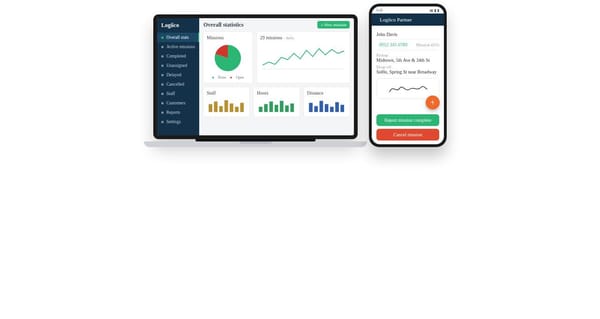
For optimizing logistics, many companies and software solutions have been offered, each with its own features and advantages. However, issues such as sanctions and high currency prices have made many of these solutions and logistics software practically uneconomical in our country. At Logiico, we have tried to provide a suitable solution for proper urban logistics management by offering smart logistics software, such as fleet and distribution management software, which, with practical features like courier management, order delivery, and fleet tracking, can reduce urban logistics costs by up to 50 percent!
Conclusion
In this article, we first became acquainted with a brief definition of logistics, and then we learned that urban logistics is a subset of external logistics and currently struggles with challenges such as inappropriate laws and regulations, high customer expectations, a shortage of human resources, and high equipment costs. Although solutions have not yet been provided for all these problems, Logiico software has been able to address a large part of these challenges with practical and optimized services for businesses. For more information about Logiico software, visit here.