Fleet management in an innovative and leading business

Logiico blog mini-articles are dedicated to short and interesting topics that exist in the fleet management and distribution industry worldwide. This time, we intend to examine four points that you may have paid less attention to in fleet management and take a look at them. Topics such as the Internet of Things, map-based management, software, and more. Stay with us.
A Creative and Pioneering Business
We can consider e-commerce as a pioneering and creative industry. Since the emergence of e-commerce-based businesses, we have always witnessed innovative and new methods that have led to the growth and advancement of this industry.
When Amazon started its work by selling a book in the nineties, it annually used new innovations to improve its service to customers worldwide to gain more trust from its customers and keep them in the purchase cycle.
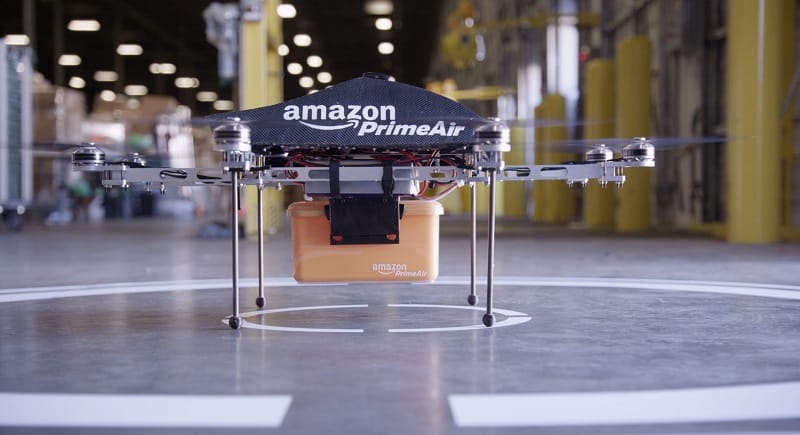
The idea of using drones for delivering purchased goods might have been unbelievable in the past decade, but today it has become one of the logistics trends and we are witnessing its successful implementation and execution worldwide.
With the ever-growing development of e-commerce businesses, customer expectations also rise. Among these, pioneering businesses will succeed that have the ability to satisfy customer needs and have a competitive advantage (trump card).
A good example to better understand the topic is same-day delivery or generally the last-mile delivery that gets the package to the customer. Competition in this area is very intense! To the extent that online stores have shifted from one-day and 48-hour delivery to under 24-hour delivery, and customers expect the goods they purchased to reach them sooner than expected.
To achieve this goal, technologies have come to the aid of business owners in many ways. Achieving such a goal requires coordination in all stages of the supply chain.
For example, in the field of warehousing, we can refer to robots and automation tools that have minimized human intervention and have led to greater and more precise coordination for sending goods by the logistics unit.
As we mentioned, the issue of proper delivery and dispatch of goods is of high importance, and businesses try to digitize their processes with various tools and software.
Here we point out four interesting points that you might have paid less attention to, which can improve the last mile delivery. Points that can bring significant efficiency to the shipping process in e-commerce businesses.
Smart Fleet Planning
Traditional travel packing methods and digital processes are suitable replacements for them. The time and cost spent on fleet planning and shipping in the past have become as easy as the touch of a button on a smartphone!
Let's put aside the ease of work and consider the accuracy and correctness of the work. Reducing errors, more precise planning, less time wastage, all are values and advantages that digital methods can create in a business.
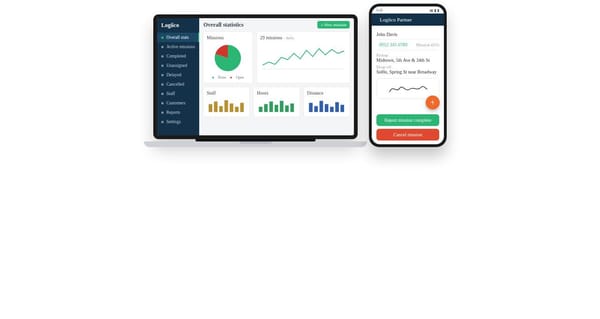
Smart delivery of goods in line with global methods, relying on metadata and information analysis and processing, has led to a significant transformation in e-commerce. A transformation that has allowed business managers to easily oversee the entire process using a simple management panel and have real-time information on the progress of activities.
With digital processes, reduce your activity time and supervision from several hours to several minutes!
More Demand, Better Supply

As we mentioned at the beginning of this mini-article, as much as e-commerce businesses develop and grow, customer demands and expectations also rise.
With the growth and development of the internet infrastructure, people no longer need to waste their time in queues and stores and can easily purchase whatever they need from the vast array of products offered by online stores with the simple press of a button.
On the other hand, online stores with an intelligent platform for better interaction with their customers, instead of wasting time and incurring high costs, by turning to technology and digital platforms, can experience easier and more enjoyable management.
Automation and Eliminating Complexities
In large organizations, processes and activities sometimes become so large and complex that managing them takes a lot of time and cost. In fleet management, with questions like:
- How can I optimize driver routes?
- How can I intelligently assign tasks to drivers?
- On what basis should I conduct the evaluation process?
- How can I manage fuel and ancillary costs?
All these questions can easily be answered with the automation and smartening of processes, resulting in time and cost savings and increased speed of action in the process.
Focus on Order Tracking
At the beginning of this mini-article, we mentioned that as e-commerce businesses grow and develop, your customers' wants and expectations also increase. Currently, fast delivery of goods to the customer no longer has the same appeal and is practically considered a standard parameter for online stores. What is currently very attractive to your customers is the ability to track their order.
Leading companies in e-commerce, to attract and retain customers in the purchase process and increase trust in their name and brand, send a text message after the customer registers a purchase for order tracking on the map, allowing them to see their order on the map from dispatch to delivery.
Conclusion
Smartening and implementing processes intelligently is essential for the growth and development of a business in today's world. As your business develops, you have more demands and requests from your customers.
This demand is not necessarily about the goods and products you have placed in your store's digital showcase. No matter how wide your product range is, if the quality of services you provide to your customers is low, you cannot retain many customers in your business's purchase cycle. Implementing smart processes for shipping goods from warehousing to order delivery to the customer, by eliminating bottlenecks and reducing human errors, increases the speed of the process and significantly reduces exorbitant costs.