Ryan Muldon's critical perspective on the emergence of technology in urban transportation
First, best, most different. These three phrases are the simplest attributes that can be considered for businesses and many startups that are active. When Zuckerberg launched Facebook, few thought that Facebook would one day reach such a position in the world. Perhaps this social network was not the first, but at the time of its launch, it was considered the best and most different social network.
In various fields, the conditions are quite similar. Consider urban transportation, for example. From the era of carriages to now! The changes that urban transportation has undergone are countless. Companies like Uber and Lyft, which are considered online taxi services worldwide, have transformed passenger transportation in an interesting way. Hybrid and electric buses and taxis, which entered the field in line with government policies to reduce air pollution, have brought significant profits to manufacturers.
In any business you are in, to be present in today's competitive market, you need to employ new ideas and technologies. Otherwise, you will likely face failure. Why? Because just as every departure has an arrival, every beginning has an end, you can only keep your business running smoothly by using the right tools at the right time.
Recently, we explored mobility and micromobility. By providing a simple definition, we examined the impacts of micromobility on urban transportation. Today, we read an article by Ryan Meldon, Associate Professor of Philosophy at New York University, about the role and importance of technology and employing new ideas in the growth and development of businesses and consequently economic conditions and other matters.
Precautionary Principle
Perhaps at the time of Facebook's launch, not much attention was paid to many of the operational protocols for launching this social network. Because many thought that the growth path of this social network would be like its predecessors. Today, for a new idea to be implemented and executed in business, it goes through complex paths that in most cases lead to the failure of the idea. According to Meldon, this caution, known in philosophical circles as the precautionary principle, ensures that the policies for implementing ideas proceed in a way that ensures the idea used does not pose any particular danger or harm to the public. As Hippocrates said in ancient Greece: Doctors should not harm patients.
The precautionary principle entered the socio-political literature of governments in 1980. When many plans for environmental protection were under review and implementation. This principle was based on the idea that the source of harm should be stopped before causing damage to nature. This thought had many critics. They believed that every new idea and technology, no matter how much it aims to ease processes, will ultimately leave some negative consequences and impacts behind.
The precautionary principle often addresses cases that leave irreversible effects. For example, dumping waste into the sea and ocean is much easier than maintaining and cleaning the seas. This case may not be very noticeable, but drinking polluted water and dealing with its long-term effects is considered one of the cases that have irreversible effects.
Managing the Effects
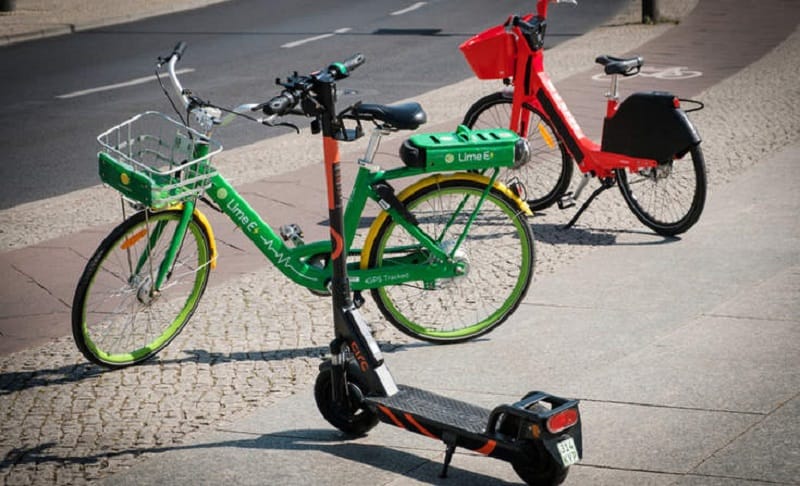
Meldon believes that although electric scooters, driverless cars, and bike-sharing services have brought conveniences, the amount of harm present in these ideas is much greater. For instance, in 2019, 1,500 accidents involving electric scooters were recorded. Many of these individuals were those who could not control the scooter. Also, add to this statistic the problems caused by leaving scooters in inappropriate places for disabled and less able individuals.
Nevertheless, one cannot ignore the positive impacts that these technologies have brought. Currently, 5.5 million passengers worldwide use electric scooters and mobility solutions for their urban commutes. With the increase in the number of micromobility and electric scooter users, there is great hope for reducing pollution in major cities and improving environmental conditions.
Final Words
Meldon concludes by pointing out that implementing new ideas and technological approaches in organizations requires preventive rules and regulations. These laws can be a good and suitable leverage to prevent the negative effects of implementing these technologies. What do you think? Share your valuable thoughts with us below this article.