Introduction to Types of Marketing (Part One)
Marketing and awareness of up-to-date and various marketing methods are considered one of the main pillars in the development and sale of products and services. In the present era, which is the era of technology and the use of new tools and methods to reduce time and working hours and increase productivity in activities, direct marketing and sales have gained a special place.
This led us to compile and publish a series of articles about different types of marketing on the Logiico Blog. This ten-part series of articles has been compiled by reviewing various sources and articles worldwide, to give you a good perspective on the different marketing methods used globally. The first part of this series of articles is dedicated to Direct Marketing. Stay with us.
Introduction to Direct Marketing
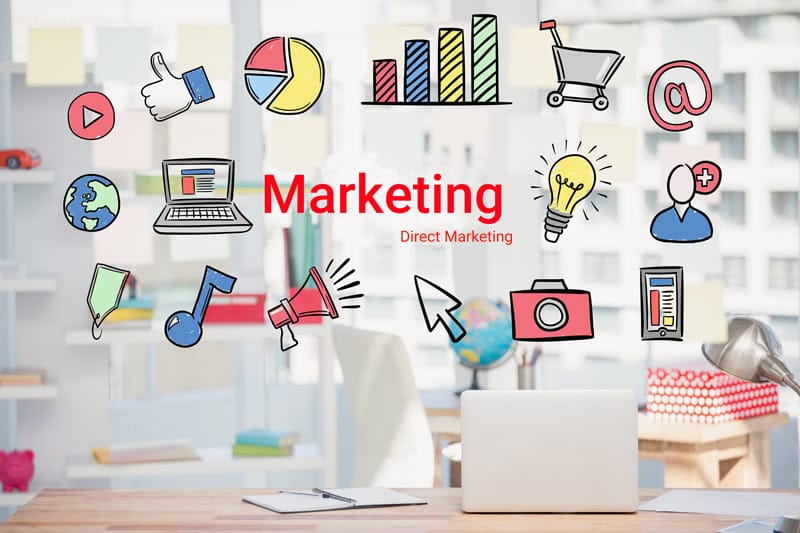
[caption id="attachment_621" align="aligncenter" width="800"]

Direct Marketing[/caption]
Direct marketing is a category of marketing types where instead of planning to attract a mass of customers and audiences, they are categorized based on factors and parameters such as:
- Identity
- Number
- Specifications
and so on. In direct marketing, various methods and tools are used to categorize and target audiences, with one of the most popular and widely used methods being email marketing. Although email marketing is a highly practical tool for targeting audiences worldwide, in Iran, given the daily habits and work ecosystem, it might not yield excellent results.
The main advantage of direct marketing is the measurability of its results.
Now, let's introduce and review other direct marketing tools.
Introduction and Review of Direct Marketing Tools
Telemarketing:
A common method in direct marketing in Iran. In telemarketing, by reviewing potential customers in the market where you operate, you prepare a list of these customers. After this, marketers establish contact by phone and record the relevant information.
Face-to-Face Marketing:
This method in direct marketing is known as a traditional method and has been an effective way to attract audiences from the past until now. In face-to-face marketing, the marketing team manager or one of the marketers arranges a meeting with a potential customer. A very common method is inviting them to lunch, known among marketers as Lunch Time. This way, you can talk live with your customer about the product and services you offer and attract their interest.
Advertising Campaigns:
[caption id="attachment_624" align="aligncenter" width="800"]

Marketing Campaign[/caption]
Marketing and advertising campaigns are another common method in attracting audiences and customers in direct marketing. In this method, by reviewing the target market, audience community, and estimating the available budget, advertising campaigns are launched. The purpose of executing advertising campaigns can be:
- Create awareness
- Create branding
- Increase sales
- Attract new audiences
- Retargeting
and so on. Each of these goals is assessed based on the conditions of the business, market conditions, and various other factors and defined as the final goal of the campaign.
Product Catalog:
Sending a product catalog can also be considered a method of direct marketing. Sending via email or any other means. This way, we can inform the customer about the features of the product and services we offer.
Advantages of Direct Marketing
As mentioned earlier, the main advantage that direct marketing brings us is measuring the success rate in attracting customers and the experiments we conduct. But that's not the whole story.
Audience Categorization and Targeting:
Categorizing and arranging audiences is another important advantage in direct marketing. In direct marketing, you can identify and invest in customers and businesses that are likely to become your customers. After this, you can convey your exclusive message to them. For example, the services and products you offer may have applications in different sectors and industries. By categorizing, you can send a specific message to each category.
Budget and Cost Optimization:
Targeting and categorizing audiences have a direct impact on reducing the budget you allocate for your marketing. When you specify your channels for a specific group of customers and audiences, the ongoing costs for activities in each of the channels become clearer in the results and reports.
Data and Statistics Analysis:
Data and information are the first step in increasing productivity and improvement. The more extensive the information you have, the more control you have over your business. Direct marketing, by providing data and statistical information about customers, target market, competitors, current trends, etc., allows you to make more informed choices.
Conclusion
Marketing strategies and methods are changing day by day. This change stems from the fact that people's tastes and behaviors in purchasing are changing. The more we familiarize ourselves with marketing methods and types and adapt new and updated strategies to the environment and ecosystem we live in, the better results we can achieve from the expenses we incur for marketing our product.
Spending a lot does not always bring the desired response and result. The important thing is to spend correctly, at the right time, and using the right tools.