John Arzan, crisis management
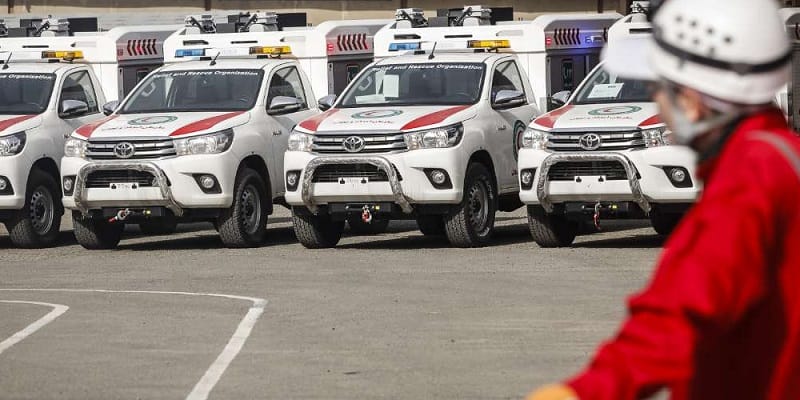
Whether it's a flood or a fire, we learn from every natural disaster to respond better to the next one.
Malcolm Turnbull, former Prime Minister and Minister for Water and Environment of Australia
Truth
In the first four months of 2018, about 2,000 hectares of forest burned and 600 fires occurred. Approximately 3,903 earthquakes with a magnitude greater than 2.5 on the Richter scale occurred in Iran in 2018. Looking at the statements above, we reach a definite conclusion: we must build and learn ways to manage and deal with natural crises. Given its geographical location and unique climate, Iran faces many crises and natural events every year.
With a bit of economic weighing, we conclude that the costs of crisis management and pre-crisis preparedness are much less than the costs of reconstruction and recovery after a crisis occurs. Crisis management, like managing any other phenomenon, requires planning, goals, budget, tools, and more. But what I want to explain to you is the tool that information technology has provided us.
Disaster Management System
The Disaster Management System, which is widely used around the world today, is essentially an information management system with many functions. Sending text messages, alarms, and any kind of notification are considered among the most important features of this system. This system is composed of smaller parts that manage various aspects of crisis response activities. Transportation management, fleet, human resources, and maintaining hierarchy are among the most important subsystems.
Now that you are more familiar with this system, let me explain a bit about its benefits and functions.
Benefits of the Disaster Management System
During and after an incident, what is the worst and most harmful event? Chaos and disorder. Now imagine if there is no proper coordination among rescue groups, military, etc., then what? In our country, in such situations, we rely on a large workforce to try to solve the problem, meaning managers and commanders make many decisions in a short time through physical presence and numerous meetings.
Now, if you add a bit of disorder, fear, news, rumors, etc., to the usual errors of a manager, the performance of the entire team falls far below expectations and the necessary level to save lives. So how does the disaster management system reduce these errors? Let me list and give examples one by one:
- Real-time and live information transfer increases the speed of coordination, decision-making, and implementation.
- Maintaining hierarchy prevents chaos and disorder, ensuring everyone knows exactly what to do.
- The system can broadcast news and alerts instantly and deliver them precisely to the intended audience through notifications.
- During a crisis, answering the question who, where, when, and what is being done is extremely important. For example, if after a flood, you realize a family is trapped in their home, you must quickly dispatch the nearest available rescue team to the location.
The benefits of using such systems are countless, and I think by now you are convinced of how effective and useful they can be. sahanafoundation.org is a well-known open-source system built and ready for disaster management.
However, we have overlooked a very important part until now, which we now want to explain further. Transportation and Fleet Management.
Logistics Management and Crisis Management
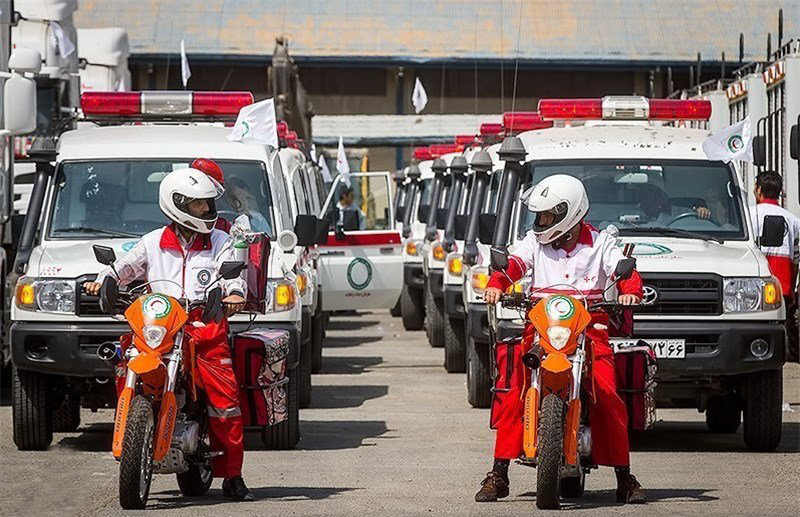
Speed and accuracy are two very important factors in crisis management. We owe the improvement of these two factors to technology and IT and telecommunications infrastructure. Smart devices and the Internet of Things have enabled processes that were previously unimaginable. The following questions are among those that become particularly important during a crisis and emergency situations:
- Where are the vehicles carrying first aid and food supplies?
- When will they reach the desired location?
- Which route should they take? (especially during floods, earthquakes, and the outbreak of a contagious disease)
- Which destination is each vehicle supposed to move to?
- What is the capacity of these vehicles?
- Is the security of this fleet ensured?
- What is the maintenance and health status of the fleet in use?
The answer to each of the above questions can save many lives. The main point is that with new infrastructure (mentioned above), it is now possible for all information related to transportation and logistics to be transmitted to sensitive and decision-making centers in a fraction of a second and managed in real-time. This is called Fleet Management in Times of Crisis.
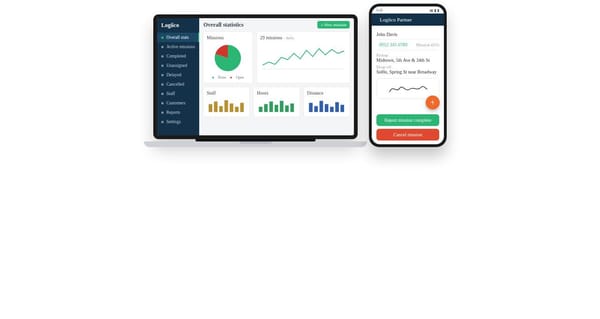
In Iran, there are good software solutions for fleet management or transportation management, among which is the Logiico Fleet Management Software, which has been working in this field for several years. This system is a suitable example of a technology tool for fleet management, responsible for controlling, planning, and evaluating logistics and transportation activities.
Final Word
Naturally, with the events that have occurred in Iran in recent years, everyone is more than ever considering the necessity of changing the crisis management structure. Our country is exposed to various natural events every day, each of which can lead to a disaster with improper management, like what happened in the Golestan flood or the Shiraz flood.
Information technology and telecommunications infrastructure have provided the means to accelerate and organize the processes of rescue, recovery, reconstruction, and coordination. Do not underestimate the effects of this; crisis management becomes much more effective with the use of technology tools. We must seek to improve processes because, in times of crisis, a one percent improvement can save many lives.
Important: Don't Forget the Power of Your Ideas!
Be sure to write your comments and suggestions below this post. Any idea from you dear readers could lead to a life-saving event.