Internet of Things and Smart Fleet Management
In the Logiico Blog articles, we discussed fleet management, and in today's mini-article, we will look at the future of fleet management and the role of technology in its improvement, especially the Internet of Things. In recent years, the role of the Internet of Things in reducing ongoing costs in processes has been significant, to the extent that, according to market research company Markets & Markets, the value of B2B fleet management markets was estimated at $10 billion by 2021.
Internet of Things Productivity in Three Areas
The most important question regarding the role of the Internet of Things in fleet management is: in which areas can we see the main impact of the Internet of Things and, more broadly, fleet management software?
The answer to this question is one word with thousands of meanings: productivity! Now, productivity in which areas:
- Maintenance and Repairs: Businesses involved in goods delivery know well that their fleet is like the driving wheel of their business, and if there's a stick in this wheel and it doesn't turn, they won't earn revenue and will lose their customers.
The Internet of Things in fleet management ensures that managers of these businesses are always aware of the process and are quickly informed in case of any issues with the fleet.
- Driver Behavior Control: High speed, sudden braking, fatigue, and impatience, etc. All these can be simple factors leading to accidents and loss of your capital. In this area, real-time coordination and notification become evident.
Informing the fleet manager or supervisor about the status of vehicles and drivers along the route can not only reduce road accidents and incidents but also protect your capital. As the old saying goes, accidents don't announce themselves.
- Fuel Consumption Optimization: Understanding driver behavior provides suitable information about their driving style. The driving style can have a direct impact on fuel consumption. Similarly, fuel consumption affects ongoing costs. By using the Internet of Things and fleet management software and being aware of fuel consumption on each route, significant savings in ongoing costs can be achieved.
We examined these three advantages together and saw that the Internet of Things can have a significant impact on:
- Reducing ongoing costs
- Reducing driving risks
- Increasing fleet productivity and performance
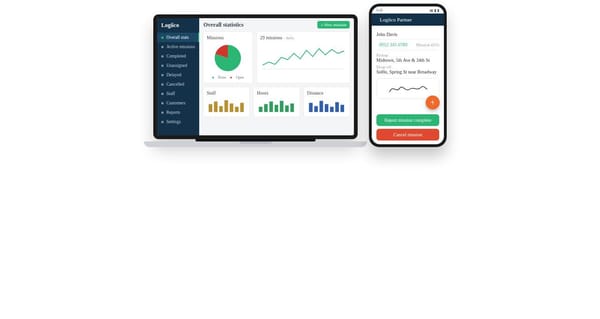
An example of Iranian software in this category that controls fleet performance is the Logiico Fleet Management Software, which easily provides complete reports to management by installing it on the driver's mobile phone.
Final Words
Moving from a traditional to a modern perspective may not be pleasant for many at first, and they might say it's not worth the effort. In the business world, to have more customers, it's always necessary to employ new methods and thus encourage customers to be more loyal to the brand we have.
Adopting new ideas and using methods that reduce friction in processes can not only increase customers but also make executing and managing processes easier, allowing us to experience the joy of smart management.