Initial Steps in Organizational Productivity

We mentioned that for increasing employee productivity, you need to go through a series of steps to plan for different parts of your organization and optimize, simplify, and reduce the costs of your processes to enhance your organization's productivity. In every business, there are various processes, and to optimize these processes, you need to refer to the activities and more detailed parts that the processes are performed by; then, by examining these parts, you can assess the possibility of optimization and consequently increase productivity. For organizational productivity and processes, we can use three general parameters to evaluate them, which are called the payroll system, work method, and work tools. In this article, we comprehensively discuss the parameters of method and tools of each work process and explain the payroll system in the second part.
Work Method
To analyze each of the processes, you need to answer these two questions:
What tasks? And in what order?
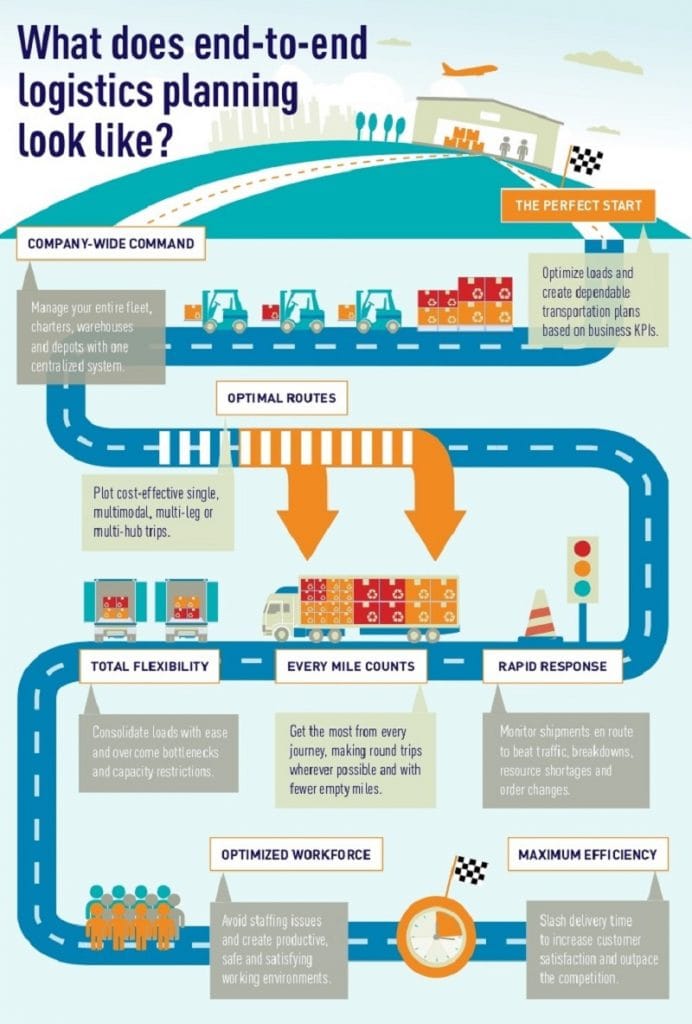
To organize the optimization process, you need to record a list of tasks you perform and then specify the order of each. For example, a freight company performs tasks such as loading, transporting goods, and unloading, each of which is divided into subcategories; for instance, when arranging the load, the order of stacking based on delivery priority is very important.
Estimating Time and Cost
Estimating the two parameters of time and cost helps you eliminate unnecessary items and reduce costs in many areas, thereby increasing the productivity of your organization and employees. You should pay attention to reviewing each process based on the priority determined in the previous step to eliminate or optimize items without specific priority.
Optimizing Detailed Activities
As you know, your main process includes a set of activities, and one of the steps in increasing your organization's productivity is reviewing these activities. For this, both the activities themselves and their order should be reviewed one by one for optimization; we try to explain this process with an example: Consider an online store that packages and ships orders every day. In reviewing the activities themselves, it can consider the possibility of reducing box sizes or placing orders with the same origin in one box (provided that the product is not damaged) and for their order, it can prioritize correctly by zoning, scheduling, considering traffic, and whether upcoming days are holidays or not.
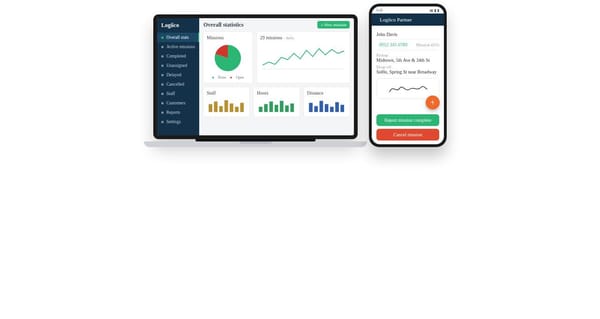
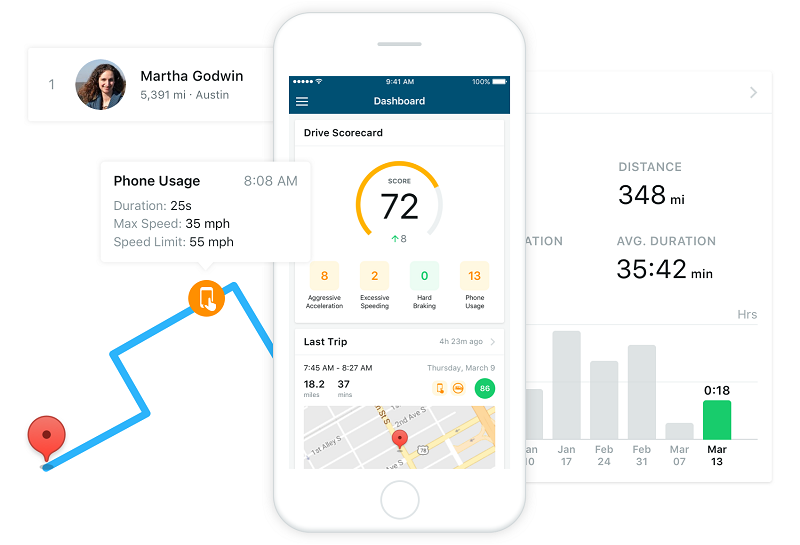
As a suggestion, using smart programs in process optimization is very useful. Routing programs like Neshan are now almost universally used and are a very suitable option for faster delivery of goods as a more detailed activity. There are other programs for managing your tasks and employees that help you with reporting, task registration, supervision, and more. Taskulu and Logiico Fleet Management Software are good examples of such programs. See the image below, which provides a general report on driver activities, making human resource control and management easier, cheaper, and faster, with a significant impact on productivity.
Work Tools
By work tools, we mean the things you use to control processes, employees, fleets, and anything else in your company, which are available in both paper and digital forms. The paper method was more commonly used in the past, but with technological advancements and the emergence of various facilities, digital tools have become very useful because they save time and costs. Regarding paper tools, specific optimization for productivity increase cannot be done, and we do not intend to provide additional explanations; however, digital tools have brought a world of possibilities for different businesses, and certainly, the selection and use of them vary depending on your organization's type, which we will explain further. For this, we categorize the organization into two groups: internal and external employees. Internal Organization: The systems that can be used in this area are divided into two categories: ERPs and more limited systems with specific functionalities, which vary depending on your organization's type and size. ERPs are usually used for large companies with multiple and complex processes that require control, supervision, and management of all parts. An ERP is an integrated and comprehensive system with specific goals and components that work together; for example, an ERP includes accounting, inventory control, human resource control, and more. You have probably heard of CRMs or customer relationship management systems; now look at the diagram below, as you can see, an ERP system itself includes CRM and is a very comprehensive system.
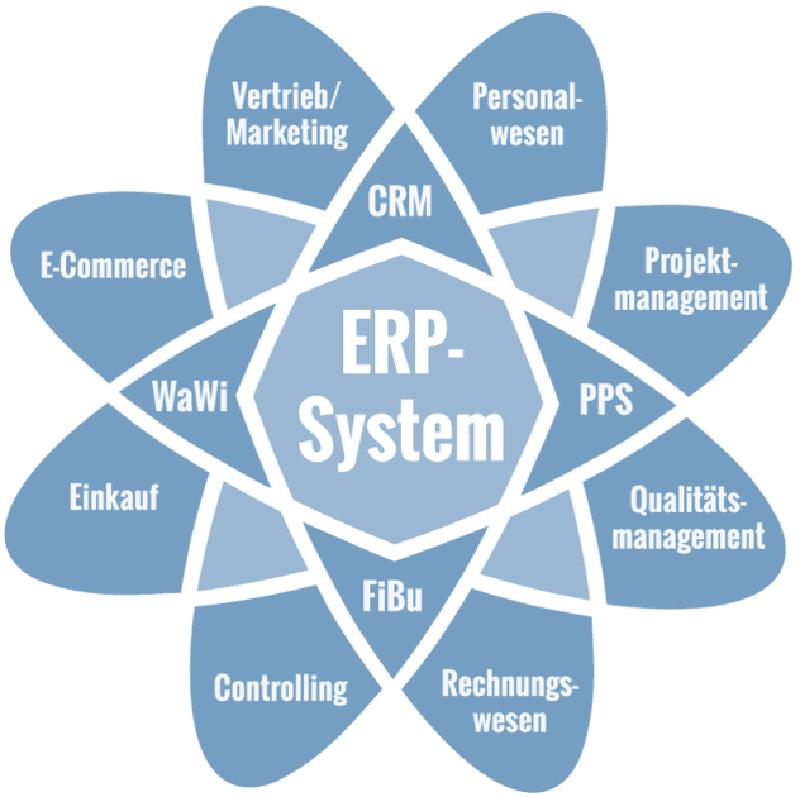
One of the best systems in this area is the SAP system, which is managed by a German company. Among the relatively good domestic examples are System Group and Chargoon, which are really suitable for internal use. As we said, these systems should not be used for every company and are chosen based on needs. For example, consider a large food complex like Farsi Food Complex, which has various components that need to work together and in coordination, so using ERPs might be a good choice for this organization, but what about a smaller restaurant? Is it necessary to spend on such an expensive system? If not, what is the solution? The next paragraph discusses this. For example, sometimes your company may only have issues in the field of human resource management and there is no need to spend money on controlling other parts. In these cases, there are systems that specifically work on one part of your organization, and choosing them based on your company's activities can have a very positive impact on making your organization's processes more productive, as they optimize and smarten the important part of your organization without additional costs, resulting in increased revenue or reduced costs, thus increasing your organization's productivity. Taskulu is a good choice as one of the internal systems. In this category, TeamCamp and Teamwork are also acceptable examples.

External Organization: The sensitivity in managing employees and processes outside the organization is where supervision over them is difficult due to physical distance, making control, organization, and perhaps optimization challenging. Fortunately, with the existence of fleet management programs and external organization factors, these problems have been largely resolved. With the help of these systems, managers can be informed of their employees' positions in real-time and have accurate reporting on their activities and work details. The example below shows one of these programs where the driver can send an online report by capturing an image of their status, allowing for quicker decision-making actions. Businesses like distribution companies, restaurants, courier managers, and freight and goods carriers prioritize using these programs in their strategy for optimizing and increasing their organization's productivity. Fleetio, Logiico, and the DMS of Digikala are among the best programs in this field.

Conclusion
Certainly, how tasks are performed and in what order in your organization plays a very fundamental role in the organization's efficiency and productivity increase, and estimating costs, time, and how each is allocated to different parts requires effective management and control. Keep in mind that you don't need to use the exact methods mentioned. Be innovative, seek help from other industries, and remember that no one knows your business and ways to optimize it better than you do.