How can we reduce the costs of our field personnel?

Many organizations have external staff who spend most of their time outside the organization and have external missions; this includes visitors, marketers, and inspectors.
Field Force Management has its own unique challenges that are often not seen in other parts of the organization. Why? Because individuals like company distribution visitors, inspectors, or even marketers conduct the main part of their activities outside the organization and company office, which leads to specific problems and challenges in field force management. Challenges such as:
- Lack of proper supervision over work execution
- High cost and complexity in the process of control and cost reduction
- Inability to collect comprehensive information for managerial decision-making
All these are significant and fundamental challenges, and depending on the method of work and the industry you are involved in, the priority of these issues may change. However, the challenge that stands out in most sectors and businesses is cost. Cost is always a concern for business managers, especially in situations where liquidity management has gained special importance due to economic conditions.
On the other hand, reducing costs is one of the most challenging parts of planning and execution in field force management, especially in managing marketers and visitors, because usually the lifeblood of the organization, i.e., revenue realization, is achieved through the activities of these colleagues. This has made managers cautious about changes that lead to cost reduction in this area, and they essentially adhere to a working system that has worked so far.
In this article, we have tried to examine the impact of field force management challenges on controlling and reducing costs, such as how the lack of proper supervision is directly related to reduced cost control. We will review some of these issues and discuss the negative impact of each challenge on cost management.
High Cost and Complexity in the Process of Control and Cost Reduction
As mentioned, cost is a determining factor in every part of the business, but in the visitor and marketing sector, due to the nature of this work, it has a high cost. Various factors affect this high cost, some of which, as mentioned, are inherent in this work. That is, costs in marketing activities are of two types:
- Hard costs, meaning these costs cannot be reduced or their reduction is very costly
- Soft costs that can be planned for reduction and control through various methods
One of the solutions for reducing this type of cost is improving the planning of visitor activities. The most important part of this planning is the routing of the points that the visitor or marketer must visit and talk to the customer. Several methods can be used to improve planning:
- Using experts for routing
- Using simple software like Excel
- Using up-to-date and advanced software for intelligent routing
Each of these methods has its own benefits and costs. The table below attempts to compare these solutions:
|
Methods |
Costs |
Benefits |
|
| 1 | Using experts for routing | · System dependency on individuals · Inability to solve complex issues · Inability to define a unified standard · Low speed in adaptation | · Experience-based method · High flexibility for new scenarios · Low risk |
| 2 | Using simple software like Excel | · Inability to solve complex issues · Inadequate support · Difficulty in technical integration · Inability to execute on a large scale | · Process organization · Very low execution cost · Accessible solution · Ability to collect information |
| 3 | Intelligent routing | · Significant cost · Time needed to adapt to the organization · Difficulty in defining unusual scenarios | · High speed · Adequate support · Integration · Solving complex issues · Ability to execute on a large scale · No dependency on individuals |
However, since intelligent routing is a modern and new method, it requires more explanation. We will try to provide a detailed explanation of how these systems work.
Using intelligent routing software that, using user data including the number of marketers and existing destinations, delivers the optimal route, which includes the least traffic and shortest path, in a few seconds and specifies the visitor's arrival time at each destination! It is clear how much this method impacts costs, both financially and time-wise. Because it reduces fuel consumption costs and time wastage since the routes are closer and less congested, there is no need for constant follow-up and repeated calls to understand the marketer's location, and field force salaries are easily calculable, placing less burden on the organization. Additionally, the marketer themselves spends less time in traffic, gets less tired, and experiences less psychological cost.
Lack of Proper Supervision Over Work Execution
What does lack of proper supervision over visitors or field force mean? It means:
You don't know exactly where your marketer is in their work process throughout the day
- How much of their work is left?
- How much have they completed?
- Where are they on their route?
- Have they actually visited the customer and conducted the visit?
These are the questions you need answers to for controlling and supervising your marketers' work. In traditional businesses, the ability to track visitors, monitor performance, and ensure the accuracy of information was very low, but today there are tools that can help you answer these questions approximately, such as:
- Tracker or GPS
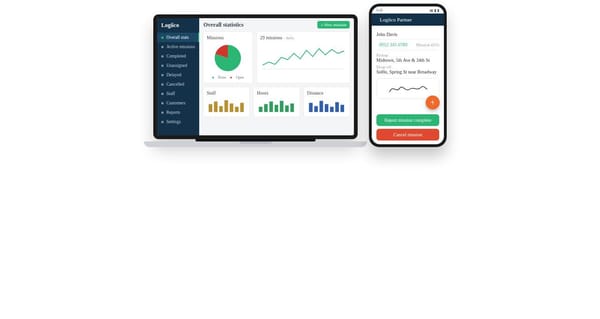
- Using marketer management applications
The more advanced these tools are, the more questions you can answer with greater accuracy. For example, with a tracker, you can't determine if your marketer's interaction with customers was successful, but if you use visitor and marketer management software, in addition to tracking and monitoring, you can define processes within it where the marketer uses the application to record and send vital customer information to you.
Inability to Collect Comprehensive Information for Managerial Decision-Making
You might think, how much information is generated or created from an inspection or marketing activity that makes its collection important? Well, with a simple review, it can be said that 5 categories of information are generated during each marketer's activity:
- Geographical information and related to registered locations for each customer or business unit
- Information on the routes taken by marketers
- Information on the duration of the visitor's interaction with the customer
- Information on the outcome of marketing and customer visits
- Information related to the marketer's working hours
These are some of the information obtained from a simple visit, and you should know that up-to-date software provides you with a very high volume of analysis and reports on this information that might surprise you.
A thorough review of reports received from marketers, visitors, and inspectors is one of the issues that is complex and confusing to address. As mentioned, in many cases, salaries and wages are based on the number of visits and their results, and form validation is needed, so their accuracy and validity must be confirmed. Regular collection of this information not only impacts your payroll system but also, after a while, you can use this high volume of information to create reports and conduct deep analyses that greatly assist in managerial decision-making. Now that we are in 2020, it can be said that organizations that are leaders and have a sustainable competitive advantage base their decisions on information and not guesswork.
The factors mentioned are only part of the challenges and costs of field force management, some of which can be improved with modern technologies.
In your opinion, what is the most costly part of field force management?
At Logiico, we provide field force management software with minimal errors. You can get familiar with the software environment through the demo by clicking on this link .