A captivating story from the logistics manager of the online store Digikala
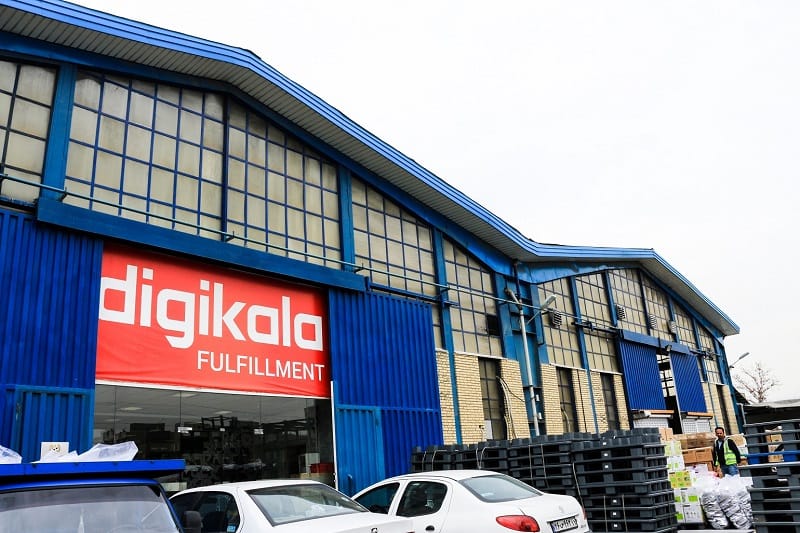
A Different Perspective on Digikala Logistics
Today, we have prepared an interesting narrative from the perspective of the Logistics Manager of this organization, Mr. Gholamreza Salehi Namin. A narrative that highlights the challenges of Digikala, its ups and downs, and the lessons it holds for new startups. Digikala, which today operates as the largest online store in the country, once faced issues with delivering its products. This interview can offer solutions for improving delivery conditions for new online stores and startups.
An Experienced and Skilled Logistics Manager
Gholamreza Salehi Namin, the logistics manager of Digikala, started his career at the age of 19 with marketing and sales in the distribution industry. After completing his university studies and entering distribution companies and chain stores, he is now considered one of the most experienced logistics and distribution managers.
After completing his bachelor's degree in industrial management, he pursued an MBA for his master's degree and is now undergoing a master's program in technology management at the University of Science and Technology.
Mr. Salehi's experiences include being the planning and logistics manager at Ay Suda (chocolate and food industries), logistics and supply manager at Shokouh Manesh distribution company representing brands (Nivea-Philips-Max Factor-Voila-Schick-Lindt), executive deputy at Tohfeh (frozen products), sales manager at Ofogh Kourosh chain stores, logistics and central warehouse manager at Ofogh Kourosh, franchise manager at Ofogh Kourosh, and currently the logistics manager for Tehran at Digikala.
Since 2013, he has also been a member of the research and development committee of the Iranian Nationwide Distribution Companies Association.
The Impact of Economic Conditions on Businesses
In a situation where the country is grappling with economic problems and various businesses are trying to survive and sustain their operations, Salehi believes that companies that had anticipated these days and developed their strategic plans can emerge successfully from these conditions.
In previous articles on the Logiico blog, we also examined the impacts of economic challenges on new businesses, and from Mr. Salehi's discussions, we can conclude that planning and anticipating difficult conditions in advance can be helpful in times of crisis.
We then asked Mr. Salehi about the challenges Digikala faced in its early days.
In your opinion, what logistical and delivery challenges did Digikala face in its early days?
"The main competitive advantages in the field of online stores are two things:
- Speed in service delivery
- Price or the cost of value created for the customer
Another point is the commitment we have to the customer in fulfilling these two principles.
You might define service speed for the customer and create this expectation, but if you can't meet it, the customer's rights are violated. In this context, there is a concept called operational power that can reduce the delay in fulfilling your commitments to the customer.
If we want to have a better definition of operational power, we can define it as:
Operational power is an iceberg that exists in logistics organizations and online stores.
As can be inferred from his statements, one of the challenges businesses face at the beginning is the issue of operational power and the ability to implement decisions promptly. Now that Digikala has grown so large and is no longer considered a startup, we asked Mr. Salehi what the main difference is compared to its early days:
How do the challenges differ between startups and businesses like Digikala?
"Perhaps we can say that in small businesses, the depth of problems is less but their number is greater, and the most important feature that small teams should have is the ability to make decisions as quickly as possible."
In one phrase, I can say that vision and flexibility are the most prominent features of an organization like Digikala. Flexibility in the sense that the startup culture should still be present in large companies. To always be able to innovate and use new ideas, we need to maintain flexibility like a startup. These two phrases can distinguish between organizations that survive and those that perish."
When we compare today's Digikala with its early days, we see that no business grows overnight and it has taken a long journey to achieve success. Here, Mr. Salehi points out an interesting fact that can be beneficial for new businesses.
New Online Stores, Take Note!
We asked Mr. Salehi, startups that have recently started their work in online sales might face challenges in product delivery. What advice do you have for these businesses? Mr. Salehi's response was noteworthy:
"These challenges you mention were also present in Digikala because Digikala started as a startup and has reached where it is today, but what led to Digikala's growth can be considered the value-centric approach defined here."
Tell us more about it.
"By value-centric approach, I mean the customer-centric approach and the chain through which the organization creates value for its customers. If we base our work on customer-centricity, it can positively impact other areas as well. In this way, customers trust and purchase from you."
Well, we've heard Mr. Salehi's insights for new businesses. We've seen the narrative of Digikala's early days and now. Let's delve into the core of the matter...
Let's get a bit more technical, what is your product delivery process like? From the moment a customer places an order until it reaches them?
"Digikala offers a wide range of services to customers. From a small flash drive to a television and groceries, Digikala has tried to consider diverse methods for this wide range of products. For example, in the field of supermarket goods (FMCG), we have tried to deliver the product purchased by the customer within three hours of placing the order.
For large and non-perishable goods, we have tried to deliver the purchased product to the customer the next day and establish this culture across the country."
When we asked him about bottlenecks, he made an interesting categorization that we will read together.
Where do you see the main bottlenecks in your product delivery and logistics process? Which part do you try to improve in this process?
"We can examine bottlenecks from two perspectives.
- Operational
- Financial
If we limit bottlenecks to the operational domain, this issue itself is divided into three parts:
- Input
- Processing
- Output
By input, we mean how much input we can handle, what problems we have in processing this amount of input, and finally, what output we can deliver to the customer.
This is a process, and we cannot look at it in isolation. Overall, the main bottleneck we have is the combination and coordination of resources based on previous forecasts. To better understand this, let me give an example.
Imagine that our most significant resource shortage occurs during sinusoidal conditions (times of the year when orders peak, like Nowruz). In such situations, it is necessary to create capacities to meet customer expectations. Perhaps our biggest challenge is that in these conditions, we have to rely on our own resources."
So far, we have reviewed the problems and bottlenecks together, now let's move on to KPIs or Key Performance Indicators.
Undoubtedly, a process of this scale needs to be continuously controlled and measured. What key indicators have you defined to control your process?
"The indicators we have considered for performance measurement are based on the commitments we made to the customer. If we want to mention the key indicators, they are as follows:
- On-Time Delivery (On-Time Delivery)
- The customer's experience of the purchase they make.
- The return rate that occurs in shipping. The higher this percentage, the more our shipping service costs increase.
These are our general indicators that we have considered to increase efficiency and customer satisfaction with the purchase, and the issue is that to improve these indicators, we need tools to receive more information.
You have a strong and experienced team for obtaining more information. How do you use IT knowledge to develop these indicators?
"Of course. The point is that we can achieve these indicators in Last Mile Logistics, which is based on the sections I mentioned above.
At Digikala, we don't just see logistics as Last Mile and divide this topic into three sections:
- Providing service to Digikala suppliers and sellers (First Mile)
- Providing service to distribution centers in the country (Mid Mile)
- Delivering goods to the customer (Last Mile)
Well, in these three areas, the customer only sees the last stage, and problems in the first two stages can cause issues for you. What measures have you taken to prevent problems here?
"To ensure that the customer is sufficiently satisfied with their purchase and that we are sure that all process stages are carried out correctly, we manage this process continuously from end to start to ensure that all stages of the logistics process are performed correctly."
In the continuation of the conversation, they pointed out an interesting issue that was a problem from our perspective and an opportunity from theirs.
What suggestions do you have to improve these conditions?
"Throughout the year, we have events that cause sinusoidal fluctuations in the supply and demand market, and to cover these fluctuations, the operations section suddenly faces a severe shortage or surplus of resources. To solve this problem, perhaps one of the things that can be done is to have 3PLs (third-party logistics companies) that can offer quality similar to our service to customers so that we can outsource part of this work.
Unfortunately, this possibility is very limited in the logistics field and almost nonexistent in order processing, but on the other hand, this can be seen as an ideal opportunity for knowledge-based companies to enter this field, i.e., the development of 3PL companies in the operations field (order processing and packaging and logistics).
Final Words
Thank you for giving us your time. Your talks and experiences can be educational and beneficial for the country's startup ecosystem.
"I am glad that good collections like Logiico have started to operate in the technology fields and have recognized the need well, and I hope your entry into the logistics field with the good tools you have can help startups and those entering this field to provide better services to their customers."